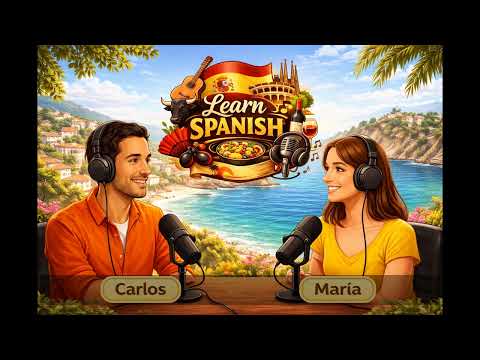
Carlos and Maria explain why gendered nouns and verb choices make 'la problema' and 'tengo calor' awkward, and when to use 'el problema', 'estoy caliente', 'cama de matrimonio' and 'embarazada'.
¿Sabes qué? Mucha gente estudia español por meses y todavía dice cosas como "soy un perro".
1. You know what? A lot of people study Spanish for months and still say things like "I'm a dog."
A mí me pasó una vez y, bueno, la cita fue rara. O sea, quería decir "tengo un perro",
2. It happened to me once and, well, the date was weird. I meant to say "I have a dog,"
pero salí diciendo otra cosa. Ay, por favor. Eso es un fluento fal total. Y no eres el único,
3. but I ended up saying something else. Oh, come on. That's a total Fluento Fal. And you’re not the only one,
¿eh? El mayor problema, a la verdad, es que traducimos palabra por palabra y, claro,
4. right? The biggest problem, really, is that we translate word for word and, of course,
pasan cosas así. Sí, sí, y otra cosa muy común,
5. things like that happen. Yes, yes, and another very common thing,
la gente dice "la problema" en lugar de "el problema". Parece pequeño, pero suena muy mal. Hoy vamos a
6. people say "la problema" instead of "el problema." It seems small, but it sounds really bad. Today we're going to
reírnos un poco y también aprender, ¿vale? Vale, pero primero, hola a todos. Gracias por
7. laugh a little and also learn, okay? Sure, but first, hello everyone. Thanks for
estar aquí con nosotros. Somos María y Carlos y este es el episodio de Momentos Graciosos al
8. being here with us. We're María and Carlos, and this is the episode of Funny Moments in
Aprender Español, versión Fluento Fals. Exacto, bienvenidos. Hoy contamos historias reales,
9. Learning Spanish, Fluento Fal version. Exactly, welcome. Today we’re sharing real stories,
damos trucos fáciles y hacemos un par de roleplays para que no repitas estos errores. Suena bien,
10. giving easy tricks, and doing a couple of roleplays so you don’t repeat these mistakes. Sounds good,
¿no? Perfecto. Y oyes y te ríes un poco mejor. Aprender con humor funciona muy bien,
11. right? Perfect. And you hear and laugh a little better. Learning with humor works really well,
porque, pues, no olvidas la frase. Empezamos con un error típico en hoteles. Mucha gente dice
12. because, you know, you don’t forget the phrase. Let’s start with a typical hotel mistake. A lot of people say
"solo quiero una cama y ya". Pero si quieres una cama grande para dos, mejor dices "cama de matrimonio",
13. "I just want a bed." But if you want a big bed for two, it’s better to say "double bed" or "matrimonial bed."
"cama doble". Sí, si solo dices "cama", la persona puede quedarse como "¿una cama para, qué?"
14. Yes, if you just say "bed," the person might think, "A bed for what?"
O sea, necesitas contexto. Hagamos un roleplay rápido, ¿te parece? Venga, yo soy el recepcionista.
15. In other words, you need context. Let’s do a quick roleplay, okay? Come on, I'll be the receptionist.
Buenas tardes, ¿en qué puedo ayudarle? Hola, buenas. ¿Tienen una habitación para dos personas,
16. Good afternoon, how can I help you? Hello, good. Do you have a room for two, please?
por favor? Queremos una cama de matrimonio, si es posible. Claro, tenemos una disponible para esta
17. We want a double bed, if possible. Sure, we have one available for tonight.
noche. La habitación cuesta 65 euros. ¿Desea incluir desayuno? Sí, por favor. Ahí llegamos tarde como a
18. The room costs 65 euros. Would you like to include breakfast? Yes, please. We'll be arriving around
las once y media de la noche. ¿Está bien? Sí, sin problema. Solo necesito su DNI, su documento. Gracias y
19. eleven-thirty at night. Is that okay? Yes, no problem. I just need your ID, your document. Thank you and
bienvenidos. Listo. ¿Ves? Frases claras, habitación para dos personas y cama de matrimonio. Nada de
20. welcome. Ready. See? Clear phrases, room for two and a double bed. No "I want a bed," which sounds weird at reception. Totally.
"quiero una cama", que suena raro en recepción. Total. Y mira, historia real, un viajero llegó y pidió una
21. And look, a true story, a traveler came and asked for a bed, just like that. The receptionist laughed and he, red as a tomato.
cama, así, sin más. La recepcionista se rió y él, rojo como tomate. Luego corrigió y dijo cama de
22. Then he corrected himself and said double bed and all was well. Ha, ha, ha, poor guy. But hey, it happens.
matrimonio y todo bien. Ja, ja, ja, pobrecito. Pero bueno, pasa. A mí me pasó con los animales. Quise
23. It happened to me with animals. I meant to say "I have a dog" and I said "I'm a dog." The girl looked at me and said, "Really? Wow, what a moment."
decir "tengo un perro" y dije "soy un perro". La chica me miró y me dijo, "¿en serio? Uf, qué momento. Ahí
24. There we learn something key, use "tener" for possession. I have a dog, I have two cats. And I’m not a dog.
aprendemos algo clave, usar tener para posesión. Tengo un perro, tengo dos gatos. Y no soy un perro.
25. Very important, right? And another trick to avoid mistakes is to listen to easy Spanish. For example,
Muy importante, ¿eh? Y otro truco para no fallar es escuchar español fácil. Por ejemplo,
26. watch children's shows. The language is simple, there are visuals and you understand better through context. It helps
ver series para niños. El lenguaje es simple, hay dibujos y entiendes mejor por el contexto. Ayuda
27. a lot to build confidence. Yes, and also talk to yourself while cooking or walking. You say
mucho a ganar confianza. Sí, y también hablar contigo mismo mientras cocinas o caminas. Dices
28. things like, "now I cut the onion," "I add salt," "I clean the table." It's real practice, very useful, with no pressure.
cosas como, "ahora corto la cebolla", "pongo sal", "limpio la mesa". Es práctica real, muy útil, sin presión.
29. Before we continue, mini break for something important, the problem. Not "la problema." Problema is masculine,
Antes de seguir, mini pausa para una cosa importante, el problema. No "la problema". Problema es masculino,
30. even though it ends in A. I know, it's weird, but that's how it is. Come on, halfway through the episode, let's do a mini test.
aunque termina en A. Ya sé, es raro, pero es así. Venga, mitad del episodio, hacemos un mini test.
31. Let’s see, listeners and María, how do you say "I'm going to have a party" without mistranslating?
A ver, oyentes y María, ¿cómo se dice "I'm going to have a party" sin traducir mal?
32. Okay, the answer is "voy a tener una fiesta." It’s not "voy a hacer una fiesta." Hacer una fiesta sounds weird,
Vale, respuesta, "voy a tener una fiesta". No es "voy a hacer una fiesta". Hacer una fiesta suena raro,
33. yes. Correct. And another one, quick, is "el problema" or "la problema."
sí. Correcto. Y otra, rápido, es "el problema" o "la problema".
34. El problema. Easy. If you say it correctly three times, it sticks, "el problema," "el problema," "el problema."
El problema. Fácil. Si lo dices bien tres veces, se te queda, "el problema", "el problema", "el problema".
35. Very good. Let’s continue with more Fluento Fals. A classic one, confusing "tengo calor" with "estoy caliente."
Muy bien. Seguimos con más fluento fals. Uno clásico, confundir "tengo calor" con "estoy caliente".
36. Please don’t say "estoy caliente" in the summer.
Por favor, no digas "estoy caliente" en verano.
37. Yes, because "estoy caliente" sounds sexual. If you have a high body temperature due to the weather,
Sí, porque "estoy caliente" suena sexual. Si tienes mucha temperatura en el cuerpo por el clima,
38. you say "tengo calor." And if it's cold, "tengo frío." Simple and safe.
dices "tengo calor". Y si hace frío, "tengo frío". Simple y seguro.
39. Let’s do a mini roleplay in a café, okay? You arrive sweating in August and order something cold.
Hagamos un mini roleplay en una cafetería, ¿vale? Tú llegas sudando en agosto y pides algo frío.
40. Hello, good. Phew, I’m really hot. Can you please give me a lemonade with ice? And also a glass of water.
Hola, buenas. Uf, tengo mucho calor. Me pones, por favor, una limonada con hielo. Y también un vaso de agua.
41. Sure, right away. Would you like something to eat? We have salad and omelet.
Claro, ahora mismo. ¿Deseas algo para comer? Tenemos ensalada y tortilla.
42. Thanks, a small omelet. And sorry, do you have air conditioning? It’s just that the sun is really strong today.
Gracias, una tortilla pequeña. Y perdón, ¿tienen aire acondicionado? Es que hoy el sol está muy fuerte.
43. Perfect. See? Easy and natural. I’m hot, can you give me, with ice. Phrases that work in real life.
Perfecto. ¿Ves? Fácil y natural. Tengo calor, me pones, con hielo. Frases que funcionan en la vida real.
44. Another very common confusion is with false friends. Embarazada is not "imberest," it’s "pregnant."
Otra confusión muy común es con falsos amigos. Embarazada no es "imberest", es "pregnant". 45. If you want to say "imberest," you say "avergonzado" or "me da vergüenza."
Si quieres decir "imberest", dices "avergonzado" o "me da vergüenza".
46. Exactly. And with verbs too, asistir is not "to help," it’s "to attend."
Exacto. Y con verbos también, asistir no es "ayudar", es "to attend".
47. If you want to say "to help," you say "ayudar." They are little things, but they change the whole meaning.
Si quieres decir "to help", dices "ayudar". Son cositas, pero cambian todo el sentido.
48. To avoid getting confused, use set phrases, little blocks.
Para que no te líes, usa frases hechas, pequeños bloques.
49. For example, "me pones," "me trae," "puedo probar."
Por ejemplo, "me pones", "me trae", "puedo probar".
If you learn the block, you don't think word for word.
Si aprendes el bloque, no piensas palabra por palabra.
Yes, blocks and repetition.
Sí, bloques y repetición.
And practice out loud at home, like we said.
Y practica en voz alta en casa, como dijimos.
Honestly, narrating your day works: "I leave the house," "I take the bus," "I arrive at work," "I have a meeting."
De verdad, narrar tu día funciona: "salgo de casa", "cojo el bus", "llego al trabajo", "tengo una reunión".
Back to hotels, a useful phrase is, "we want a room with a double bed" or "with two beds."
Volviendo a hoteles, una frase útil es, "queremos una habitación con cama de matrimonio" o "con dos camas".
Or also, "double bed."
O también, "cama doble".
They're practical synonyms.
Son sinónimos prácticos.
This way, you avoid awkward laughs.
Así evitas risas incómodas.
And if you don't understand, say, "sorry, can you repeat more slowly?"
Y si no entiendes, di, "perdón, ¿puede repetir más despacio?"
Or, "what does that mean?"
O, "¿qué significa?"
It's all good, people understand and help.
No pasa nada, la gente entiende y ayuda.
Speaking of help, another funny mistake is translating "to look for" as "look by."
Hablando de ayuda, otro error chistoso es traducir "to look for" como "mirar por".
No, no, it's "to search."
No, no, se dice "buscar". I'm looking for my phone, not looking by my phone.
Busco mi móvil, no miro por mi móvil.
Sounds odd, you know?
Suena raro, ¿sabes?
Yes.
Sí.
And with "gustar," be careful.
Y con gustar, ojo.
You don't say "I like me the coffee," you say "I like the coffee."
No dices "me gusto el café", dices "me gusta el café".
The subject is the coffee, and you receive the action.
El sujeto es el café, y tú recibes la acción.
It's a bit different, but you learn with examples.
Es un poco diferente, pero se aprende con ejemplos.
Let's do a quick second roleplay with "gustar."
Hagamos un segundo roleplay rápido con gustar.
I'll ask, and you respond, okay?
Yo pregunto y tú respondes, ¿vale?
Do you like the omelet?
¿Te gusta la tortilla?
Yes, I really like the omelet.
Sí, me gusta mucho la tortilla.
And I also like the croquettes.
Y también me gustan las croquetas.
But I don't like onion in the omelet, I'm sorry.
Pero no me gusta la cebolla en la tortilla, lo siento.
Perfect.
Perfecto.
And if it's plural things, like you said, "I like the croquettes."
Y si son cosas en plural, como dijiste, "me gustan las croquetas".
Singular, "I like the omelet."
Singular, "me gusta la tortilla".
Nice and clear.
Bien clarito.
Another funny anecdote.
Otra anécdota graciosa.
A friend wanted to invite people and said, "I'm going to make a party."
Un amigo quería invitar a gente y dijo, "voy a hacer una fiesta".
The natives understood, but they laughed a bit.
Los nativos lo entendieron, pero se reían un poco.
The most natural is, "I'm going to have a party" or "I'm going to organize a party."
Lo más natural es, "voy a tener una fiesta" o "voy a organizar una fiesta".
Yes, to practice, a mini invitation dialogue.
Sí, para practicarlo, un mini diálogo de invitación.
I'll call you, okay?
Yo te llamo, vale.
Hi, Carlos, I'm going to have a party at my place on Saturday.
Hola, Carlos, el sábado voy a tener una fiesta en casa.
Are you in?
¿Te apuntas?
Of course I am.
Claro que sí.
What time should I start arriving?
¿A qué hora empiezo a llegar?
Do you need me to bring anything, drinks or food?
¿Necesitas que lleve algo, bebidas o comida?
Come around 8 in the evening, and if you can, bring some bread and some fruit.
Ven sobre las 8 de la tarde y si puedes, trae pan y algo de fruta.
Oh please, don’t say, "I'll do the music," say, "I'll play the music."
Ay, por favor, no digas, "yo hago la música", di, "yo pongo la música".
Ha, ha, ha, okay, I'll play the music.
Ja, ja, ja, vale, yo pongo la música.
And if I get lost, I'll call you and ask, "sorry, is this the street?"
Y si me pierdo, te llamo y pregunto, "perdón, ¿esta es la calle?"
Simple phrases, no stress.
Frases simples, nada de estrés.
Quick recap of tips we've seen.
Resumen rápido de tips que ya vimos.
1. Use "tener" for possession and for physical sensations, "I have a dog," "I'm hot."
1. Usa tener para posesión y para sensaciones físicas, "tengo un perro", "tengo calor".
2. Avoid literal translations like "to make a party" if it sounds weird.
2. Evita traducciones literales como "hacer una fiesta" si suena raro.
3. Learn useful blocks and repeat them.
3. Aprende bloques útiles y repítelos.
Y 4. Watch kids' shows and narrate your day out loud.
Y 4. Mira series para niños y narra tu día en voz alta.
It really works.
De verdad, funciona.
5. Remember gender exceptions, like "el problema" and "el tema," which are also masculine.
5. Recuerda excepciones de género, como "el problema" y "el tema", que también es masculino.
Now, I’d like to ask you who’s listening, what was your funniest slip-up in Spanish?
Ahora, pregunta para ti que escuchas, ¿cuál fue tu fluento fal más gracioso en español?
6. Did you accidentally say "I'm a dog"?
6. ¿Dijiste "soy un perro", por error?
7. Or did you order something weird at a hotel or a bar?
7. ¿O pediste algo raro en un hotel o un bar?
8. Share the exact phrase with us, so we can all learn.
8. Cuéntanos la frase exacta, que así todos aprendemos.
9. And also tell us your favorite trick for practicing, okay?
9. Y dinos también tu truco favorito para practicar, ¿vale?
10. Do you watch cartoons in Spanish?
10. ¿Ves dibujos animados en español?
11. Do you narrate your actions in the kitchen?
11. ¿Narras tus acciones en la cocina?
12. You probably have an idea that helps others.
12. Seguro tienes una idea que ayuda a otros.
13. Well, let’s wrap it up. If this episode made you smile and helped a bit, give it a like. And share it with that person who always says "la problema," hehe.
13. Bueno, vamos cerrando. Si este episodio te sacó una sonrisa y te ayudó un poco, dale like. Y comparte con esa persona que siempre dice "la problema", jeje.
And of course, subscribe to the channel for more easy and fun Spanish. We bring you useful phrases, real stories, and lots of laughs every week.
Y, claro, suscríbete al canal para más español fácil y divertido. Cada semana traemos frases útiles, historias reales y, pues, muchas risas.
14. Thanks for being here today. Remember, making mistakes isn't bad; it’s part of the journey. And if you laugh at your errors, you learn faster.
14. Gracias por estar aquí hoy. Recuerda, equivocarse no es malo, es parte del camino. Y si te ríes de tus errores, aprendes más rápido.
15. See you next time.
15. Nos vemos la próxima.
16. And please, repeat after me, "I have a dog."
16. Y, por favor, repite conmigo, "tengo un perro".
17. I’m not a dog.
17. No soy un perro.
18. Bye.
18. Chao.
19. Bye-bye.
19. Chao, chao.
20. Take care and practice a little every day.
20. Cuídense y practiquen un poquito cada día.
21. With humor and patience, Spanish comes naturally.
21. Con humor y paciencia, el español entra solo.
Thank you.